
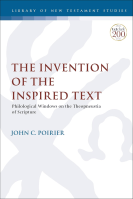
Note: This is a guest post by John C. Poirier, written in response to my review of his book The Invention of the Inspired Text (T&T Clark, 2021). I wish to thank Kyle Dillon for allowing me to answer his review and response. Among my book’s detractors, Dillon sticks out for the honesty of his […]
Continue reading
Archive | Theology RSS feed for this section





Review of What Is Race? Four Philosophical Views
 May 26, 2025
  0 Comments
I just finished reading the book What Is Race? Four Philosophical Views (Oxford University Press, 2019). It’s an excellent treatment of a surprisingly difficult topic. When people ordinarily speak of race, what exactly are they referring to? Is it something real, or not? Is it determined by biology, or power dynamics, or culture, or something […]
Continue reading Defending Perspicuity: A Response to The Obscurity of Scripture by Casey Chalk
February 6, 2024 12 Comments
Note: the following is a modified transcript of an adult Sunday school lecture that I taught at Riveroaks Reformed Presbyterian Church (PCA) in October 2023, as part of a series defending the Protestant doctrine of Scripture. In this lecture, I address some common Roman Catholic objections to the perspicuity of Scripture. I do this primarily […]
Continue reading For a Continuing Church: A Review, Part Two
December 13, 2016 1 Comment
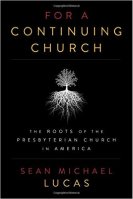
Note: Part One of this review offers an evaluation of For a Continuing Church and its main thesis concerning the PCA’s identity. Applying Our Identity As Dr. Sean Lucas convincingly establishes throughout For a Continuing Church, the PCA was formed as a “conservative ‘mainline’ Presbyterian body.” The founders chose to establish broader boundaries for the […]
Continue reading Is Genesis a Myth? Part 2: Genesis and Science
September 2, 2016 1 Comment
Note: I originally wrote this post on another blog as part of an FAQ for my church in 2013. I am re-publishing here (with minor edits), since I will be using it in an upcoming class on science, faith, and Old Testament interpretation. Part 1 dealt with the literary relationship between Genesis and Ancient Near […]
Continue reading Review: Trinity and Organism, by James Eglinton
February 29, 2016 1 Comment
James Eglinton, Trinity and Organism: Towards a New Reading of Herman Bavinck’s Organic Motif (T&T Clark, 2012) Evangelicals in America have an identity problem. The current political landscape demonstrates a divide within American evangelicalism on how to put our values into practice. At the heart of this fissure is a lack of coherent theological ethics – […]
Continue reading Grace, Truth, Worldviews and The Ongoing Abortion Debate
October 16, 2015 1 Comment
I’ve mostly watched the recent abortion debate on my social media feeds with interest, hope, excitement, compassion, and anxiety. My excitement comes from my hope that our society may move closer toward the theological and philosophical position that human life at every stage is valuable. My compassion shows up when I think about people I have who have […]
Continue reading From Culture War Burnout to Cultural Faithfulness
August 13, 2015 1 Comment
The question of Christianity and cultural faithfulness has been one of my most passionate and personal questions; it’s also one of the more contentious questions facing the American Church today. The more you read, the more complicated the question becomes. As a friend of mine says often, “Everything is complicated and everything is connected.” How […]
Continue reading Review: Spiritual Friendship by Wesley Hill
August 10, 2015 1 Comment
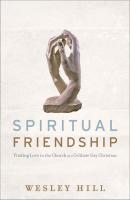
Wesley Hill, Spiritual Friendship: Finding Love in the Church as a Celibate Gay Christian (Brazos, 2015). As an unmarried seminarian, I found myself surrounded by classmates who were married, many of them with children. It wasn’t uncommon for professors to verbally acknowledge and extend academic grace to students who were behind, tardy, or absent due to a […]
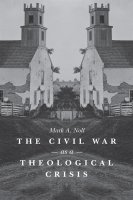
Continue reading Civil War as Theological Crisis: A Review
December 8, 2014 2 Comments
In an earlier series of posts, I reviewed Dr. Sean Lucas’ biography Robert Lewis Dabney. One conclusion Lucas demonstrates from Dabney’s work was the need for more rigorous theological argumentation in making ethical conclusions. This conclusion came from observing the use of Scripture to justify slavery by leaning inappropriately on proof-texts, rather than arguing from […]
Continue reading
 Allkirk Network