
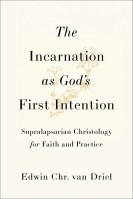
There are some in-house Reformed debates that are obscure, and then there are some that are really obscure. For those interested in such debates, the word “supralapsarianism” is usually taken to mean the minority Reformed view that God’s decree of election comes logically before the decree of the fall—in contrast to the majority “infralapsarian” view […]
Continue reading
Archive | Systematic Theology RSS feed for this section



No Trinity, No Love?
 December 17, 2025
  0 Comments
A common argument heard among evangelicals today is, “If God isn’t Triune, then he can’t be loving.” That is, since love requires someone else to love, there must logically be a plurality of persons within God. This argument is central to the popular book Delighting in the Trinity by Michael Reeves (IVP, 2012). And it’s […]
Continue reading Review: The Invention of the Inspired Text by John C. Poirier
July 15, 2025 1 Comment
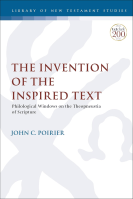
Recently I taught a church Sunday school class on the doctrine of Scripture, defending the Protestant view of inspiration. During the class, I referenced a debate that had taken place earlier between Trent Horn (a Roman Catholic) and Gavin Ortlund (a Protestant). Horn, in arguing for the necessity of the papal magisterium to affirm biblical […]
Continue reading Review: God Reforms Hearts by Thaddeus Williams
October 10, 2022 0 Comments
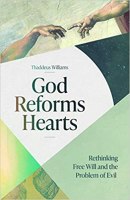
These words, written by C.S. Lewis in Mere Christianity, reflect one of the most common Christian responses to the problem of evil and suffering in the world. At first glance, the so-called “free will defense” has considerable appeal. It seems to absolve God of responsibility for the existence of evil, by shifting that responsibility to […]
Continue reading Does nature need addition? Bavinck against the donum superadditum
August 23, 2019 3 Comments
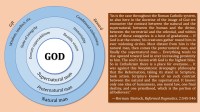
One of the central points of disagreement among the various Christian traditions is the question of the relationship of grace and nature. Should we say that grace opposes nature? Affirms nature? Perfects nature? Flanks nature? The answer that Dutch theologian Herman Bavinck famously gives is that grace restores nature: it gives back to us what […]
Continue reading Doubting Thomists: John Bolt’s defense of (the real) Aquinas against his Reformational critics
September 26, 2018 3 Comments
Protestants have always had a complicated relationship with the great medieval theologian Thomas Aquinas. On the one hand, the Reformers rejected many of his views on salvation and the sacraments. On the other hand, even in the heat of post-Reformation polemics, Protestants and Catholics were still able to find much common ground in his teachings […]
Continue reading Roundup on the Frame-Dolezal Dustup
December 1, 2017 10 Comments
First it was Eternal Subordination of the Son; now it’s Theistic Mutualism. It’s hard to keep up with all of these modern evangelical debates over the doctrine of God. For those just tuning in, the latest controversy centers on the recently published volume All That Is in God by Reformed Baptist theologian James Dolezal (Reformation […]
Continue reading Resources on Daniel’s Seventy Weeks
April 14, 2017 13 Comments
24 Seventy weeks are decreed about your people and your holy city, to finish the transgression, to put an end to sin, and to atone for iniquity, to bring in everlasting righteousness, to seal both vision and prophet, and to anoint a most holy place [literally holy of holies]. 25 Know therefore and understand that […]
Continue reading Further Thoughts on Modern Bible Translations and Textual Criticism
October 10, 2016 1 Comment
Based on some helpful feedback that I received on my previous post on textual criticism, I thought that I should write a follow-up post to clarify a few things. To begin with, I should state upfront that I’m a relative newcomer to the subject of textual criticism, and would by no means consider myself an expert. […]
Continue reading In Defense of Modern Bible Translations: A Case for Eclecticism in Textual Criticism
October 4, 2016 5 Comments
How do we know that the text of the Bible has been reliably preserved throughout the centuries? If I were to make a list of all the objections that I commonly hear from skeptics against Scripture’s authority, this question would probably come close to the top of that list. It is often argued that if […]
Continue reading
 Allkirk Network